Understanding LLM Inference Costs: The Impact of Context Length
When working with Large Language Models (LLMs), understanding inference costs is crucial. Many pricing models suggest a linear relationship between the length of the input context and the cost of processing it. However, the reality of serving LLMs on hardware reveals a more complex, non-linear cost curve, particularly as context windows grow very long. This tutorial will demystify this discrepancy, explaining the technical reasons behind it and how factors like the Key-Value (KV) cache and GPU memory constraints contribute to varying costs.
Decoding LLM Context and Tokens
To grasp LLM inference costs, we first need a clear understanding of context length and tokens. In the world of LLMs, 'context length' refers to the maximum number of tokens an LLM can process at once. A 'token' is a basic unit of text, which can be a word, part of a word, or even a single character. For instance, the word "understanding" might be one token, while "un-der-stand-ing" could be broken into multiple subword tokens depending on the tokenizer. When you send a prompt to an LLM, it's converted into a sequence of these tokens. The longer your prompt or the more information you want the LLM to consider—whether it's a document for summarization, a codebase for analysis, or a long-running conversation—the more tokens it consumes. Longer context windows are highly desirable because they allow LLMs to maintain a deeper understanding across extensive inputs, process entire documents without truncation, or generate more coherent and extensive outputs. For example, a model with a 256,000-token context window can analyze a substantial book or an entire codebase in a single pass, offering capabilities far beyond models limited to a few thousand tokens. This enhanced capability, however, comes with specific performance and cost implications that are often not immediately apparent from simple per-token pricing.
Understanding the Key-Value (KV) Cache
The Key-Value (KV) cache is a critical component in the architecture of transformer-based LLMs, which are the backbone of most modern large language models. During the self-attention mechanism, which allows the model to weigh the importance of different parts of the input sequence, each token generates 'key' and 'value' vectors. These vectors are essential for computing the output of subsequent tokens. Without the KV cache, the model would have to recompute these key and value vectors for every token at every step of the generation process, leading to a significant amount of redundant computation and dramatically slowing down inference. The KV cache stores these vectors in memory, making them readily available for future attention calculations. This caching mechanism significantly speeds up inference, especially during the auto-regressive decoding phase where the model generates one token after another based on the preceding context. As the input context length increases, the number of tokens grows, and consequently, the KV cache also grows linearly in size. For instance, if you double the input context from 10,000 to 20,000 tokens, the KV cache required to store the key and value vectors for these tokens will also roughly double. This linear growth in memory footprint is a fundamental aspect of how transformers process sequences, and it directly impacts the memory consumption of an LLM during inference.
The Impact of Fixed Hardware Memory (VRAM)
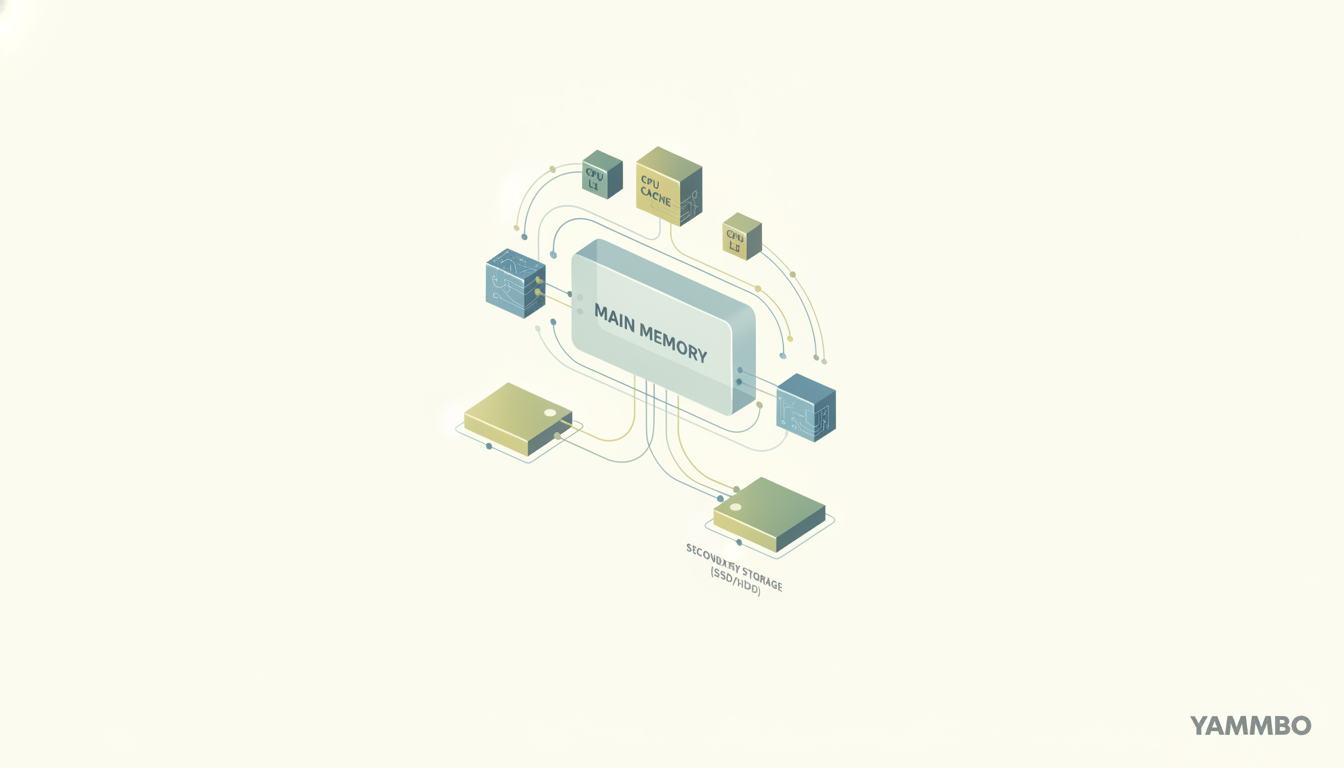
While the KV cache grows linearly with context length, the hardware it runs on—specifically, the Graphics Processing Unit (GPU) and its Video Random Access Memory (VRAM)—has fixed capacity. Modern LLMs are incredibly memory-intensive, and the KV cache is a significant consumer of this precious VRAM during inference. Consider a high-performance GPU like the NVIDIA H200, which offers substantial VRAM (e.g., 141 GB). Even with such capacity, there's a limit to how much KV cache it can hold alongside the model weights themselves. When the context length becomes very long, the KV cache can start to consume a disproportionate amount of the available VRAM. As VRAM approaches its limits, the system might have to employ various strategies to manage memory. These could include offloading parts of the cache to slower system memory (RAM) or even disk, or more frequently swapping data between different memory tiers. Such operations introduce significant latency, reduce throughput, and can even lead to 'out of memory' (OOM) errors, effectively increasing the time and computational resources required to process each token. This collision between the linearly growing KV cache and fixed VRAM capacity is the primary driver of non-linear inference costs for long contexts. It means that processing a token when the KV cache is small and fits comfortably in VRAM is far less resource-intensive than processing a token when the cache is pushing the VRAM limits, potentially requiring more expensive hardware or a distributed setup across multiple GPUs.
Observing the Non-Linear Cost Curve
The interaction between the KV cache and fixed VRAM capacity results in a non-linear cost curve for LLM inference. While per-token pricing from providers might appear flat, the underlying hardware cost per token can escalate significantly as context length increases. Beyond a certain threshold, as the KV cache consumes more and more VRAM, the efficiency of processing each additional token diminishes. This isn't because the LLM itself becomes inherently less efficient, but because the underlying hardware infrastructure struggles to keep up with the increasing memory demands of the KV cache. For example, empirical observations on models like Ministral 3 14B Instruct, when served with optimized frameworks like vLLM on powerful GPUs such as an NVIDIA H200, have shown that the effective cost per token can rise considerably—sometimes by several multiples—when moving from shorter contexts (e.g., 2,000 tokens) to very long ones (e.g., 256,000 tokens). This increase in cost manifests not just monetarily, but also in terms of increased latency and reduced throughput. The exact point at which this non-linearity becomes pronounced varies depending on the specific LLM architecture, its size, the serving framework, and the GPU hardware. However, the fundamental mechanism—KV cache growth hitting VRAM limits—remains a consistent factor influencing the true cost of long-context inference. This means that while the first 10,000 tokens might be relatively cheap to process, the next 10,000 tokens in a very long sequence could be disproportionately more expensive due to mounting memory pressure.
Practical Implications for LLM Usage
Understanding this non-linear cost dynamic has significant practical implications for anyone developing with or deploying LLMs.
- Evaluate Provider Pricing Tiers: Some LLM providers, like certain generations of OpenAI's GPT or Google's Gemini models, explicitly introduce tiered pricing for long contexts. For instance, the cost per million input tokens might double, and output tokens might increase by 1.5x, once the context length exceeds a certain threshold (e.g., 200,000 or 272,000 tokens). These tiers are a direct reflection of the underlying non-linear serving costs, designed to account for the increased resource consumption. Other providers, like some Anthropic models, might offer flat rates even for very long contexts, indicating they might be absorbing these costs or have highly optimized their infrastructure and models to mitigate the non-linearity.
- Optimize Context Usage: For applications that require long contexts, consider strategies to reduce the effective context length where possible. This could involve advanced summarization techniques to condense input, retrieval-augmented generation (RAG) to dynamically fetch only the most relevant information, or breaking down large tasks into smaller, sequential prompts that maintain context across turns without requiring a single massive input.
- Monitor Resource Consumption: If you are self-hosting LLMs or using cloud GPU instances, closely monitor VRAM usage, GPU utilization, and throughput as context lengths increase. This will help you identify the inflection points where performance degrades and actual costs per token begin to rise sharply, allowing you to scale your infrastructure proactively.
- Choose Models and Hardware Wisely: The efficiency of KV cache management and memory optimization can vary significantly between different LLM architectures and serving frameworks. Researching models known for efficient long-context handling or frameworks designed for high-throughput LLM serving can help mitigate these effects. Similarly, selecting GPUs with ample VRAM or considering multi-GPU setups is crucial for effectively handling demanding long-context workloads.
By being aware of these underlying hardware economics, you can make more informed decisions, optimize your LLM applications for both performance and cost, and better predict your operational expenses.
The notion that LLM inference costs scale linearly with context length is a simplification that overlooks critical hardware realities. The linear growth of the Key-Value cache and its collision with finite GPU memory capacity are fundamental drivers of non-linear serving costs for long contexts. By understanding these technical underpinnings, you can better navigate the complexities of LLM deployment, optimize your usage, and make more accurate cost predictions. For more insights into optimizing your digital presence and leveraging advanced technologies, explore the resources available at Yammbo.