How to Optimize LLM Costs with Dynamic Model Routing
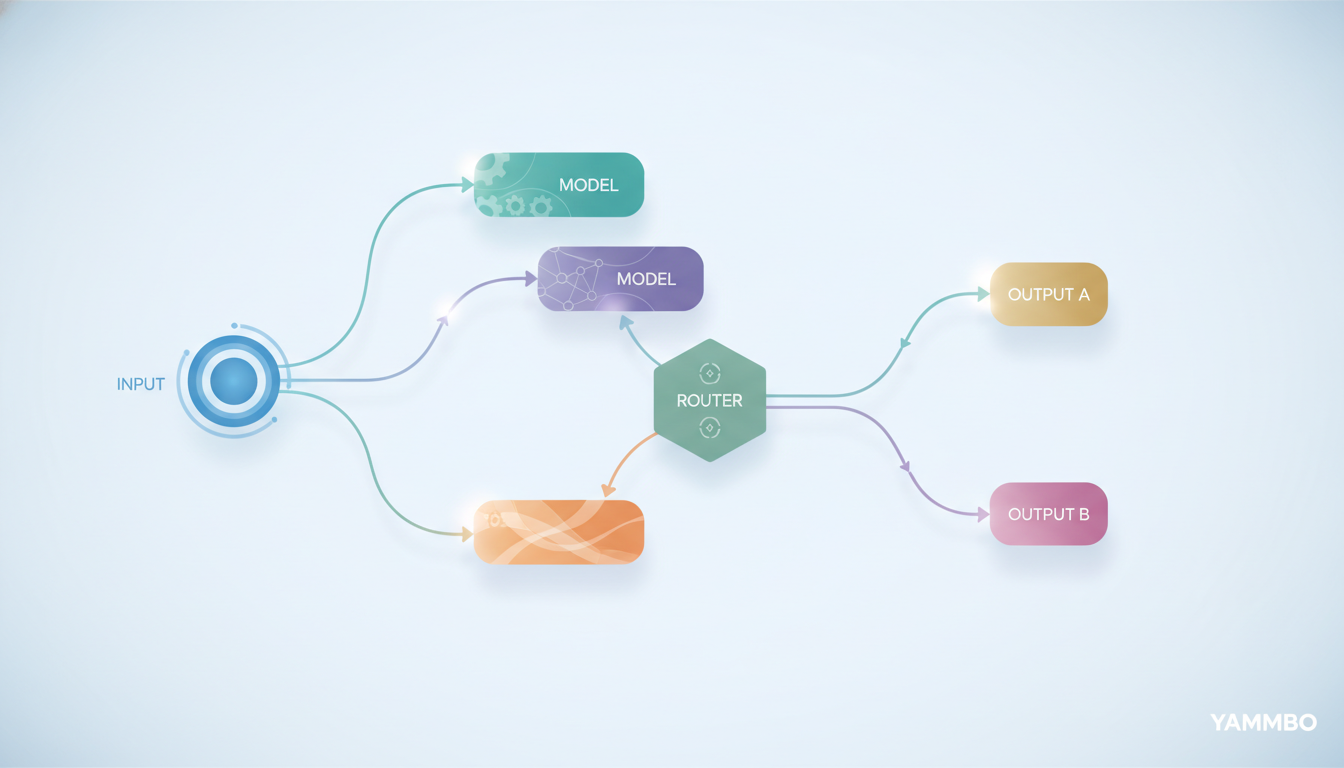
Many development teams face unexpectedly high inference bills when integrating large language models (LLMs) into their applications. A common culprit is routing all requests, regardless of complexity, through a single, often expensive, frontier model. This "one-model-fits-all" approach leads to significant waste, as simple lookups or short summaries incur the same high per-token cost as complex reasoning tasks. This tutorial will guide you through implementing dynamic model routing, a strategy that intelligently directs requests to the most appropriate and cost-effective LLM for the job, optimizing both performance and expenditure.
Understanding the Cost-Efficiency Problem
The landscape of Large Language Models is diverse, with offerings ranging from highly sophisticated, general-purpose models to more specialized, open-weight alternatives. Each model comes with its own set of capabilities, performance characteristics, and, crucially, pricing structures. Frontier models, while incredibly powerful for complex problem-solving, often carry a premium per token or per request. When every interaction with your application, from a quick data retrieval to an intricate logical deduction, is processed by such a model, costs can escalate rapidly and unpredictably.
Consider an application that uses an LLM for various tasks: generating creative content, summarizing long documents, answering factual questions, and even performing simple data reformatting. If all these tasks are funneled to the same high-tier model, you're essentially paying for supercomputer-level processing for tasks that a much smaller, cheaper model could handle with equal, if not superior, efficiency. This inefficiency is not just about raw cost; it also impacts latency and resource utilization. A simpler task might be processed faster by a smaller model, freeing up the more powerful model for its intended, high-value work. The core problem, then, is a mismatch: applying an expensive, generalist solution to a spectrum of problems, many of which require only a cost-effective, specialist approach. Recognizing this discrepancy is the first step toward building a more intelligent and economical LLM infrastructure.
Identifying Model Strengths for Routing
Effective dynamic routing hinges on a clear understanding of what different LLMs excel at. Models are not interchangeable; they are tools, each suited for particular types of work. By categorizing tasks and understanding model capabilities, you can make informed routing decisions.
Let's consider two archetypal categories of LLMs that highlight the potential for routing:
- High-Capability, General-Purpose Models: These are typically closed, proprietary models renowned for strong reasoning, deep contextual understanding, and robust performance across complex tasks. They excel at intricate problem-solving, nuanced content generation, multi-step logical deductions, and handling long, complicated conversational threads. The trade-off is often a higher per-token cost and potentially higher latency. Examples of tasks best suited for these models include:
- Complex code generation and debugging.
- In-depth analysis of legal or medical documents.
- Creative writing or ideation requiring sophisticated understanding.
- Agentic workflows demanding precise reasoning and tool orchestration.
- Cost-Effective, Specialized, or Open-Weight Models: This category includes models that might be smaller, fine-tuned, or available as open-weight releases served competitively. While they might not match frontier models' raw reasoning, they often offer excellent performance for specific use cases at a significantly lower cost. They handle high volumes efficiently and are ideal for repetitive tasks, long context windows without deep reasoning, or extensive tool use. Examples of tasks where these models shine include:
- Summarizing lengthy articles or reports.
- Extracting specific data points from unstructured text.
- Translating text between languages.
- Generating boilerplate code or simple scripts.
- Initial content drafts or brainstorming.
The key insight is that neither model type is inherently "better"; they are simply strong at different things and priced accordingly. The entire rationale for dynamic routing lies in leveraging this difference to ensure expensive resources are reserved for tasks that genuinely require them, while more economical options handle the rest.
Why Manual Routing Falls Short
Faced with the cost problem, many teams initially consider building routing logic directly into their application code. While seemingly straightforward, this approach quickly introduces complexity and fragility.
The simplest form of manual routing involves if/else statements based on superficial request characteristics, such as prompt length or specific keywords. For instance, a rule might send prompts longer than 500 tokens to a powerful model and shorter ones to a cheaper alternative. However, this approach is inherently brittle:
- Lack of Nuance: Prompt length doesn't always correlate with complexity. A short, abstract prompt might require deep reasoning, while a long one could be a simple summarization.
- Maintenance Burden: As your application evolves and model capabilities change, hardcoded rules become difficult to maintain and update. Any modification requires redeploying application code.
- Scalability Issues: Managing a growing list of rules and conditions across multiple parts of your codebase becomes unwieldy and error-prone.
A more sophisticated manual approach involves using a small, inexpensive LLM to classify incoming requests before routing them. While better than rigid if/else logic, this still presents significant drawbacks:
- Increased Latency and Cost: Every request now incurs the overhead of two LLM calls instead of one – first to the classifier, then to the target model. This adds latency and, ironically, can increase overall inference costs if not carefully managed.
- Classifier Accuracy: A general-purpose small model might not be highly accurate at classification, leading to misrouted requests and suboptimal performance or cost. Building and maintaining a dedicated, accurate classifier is effectively building a second application whose sole purpose is to manage the first.
- Tight Coupling: The routing logic remains tightly coupled with your application, making it harder to swap models, update routing strategies, or experiment with new approaches without modifying core application code.
These challenges underscore the need for a more robust, decoupled routing solution that operates at an infrastructure level, transparently managing model selection without burdening the application layer.
Designing an Effective Routing Strategy
An effective routing strategy abstracts the complexity of model selection from your application, placing it into a dedicated, intelligent layer. This layer acts as a central dispatcher, receiving all LLM requests and forwarding them to the most appropriate backend model.
Here are the key principles for designing such a strategy:
- Decoupling Application from Models: Your application should only interact with the router's API endpoint, not directly with individual LLM APIs. This ensures that changes to your model ecosystem (adding new models, deprecating old ones, adjusting routing logic) do not require modifications to your core application code.
- Robust Decision Criteria: The router needs clear, reliable criteria to make routing decisions. These can include:
- Explicit Metadata: The most straightforward approach. Your application explicitly sends a
task_typeorcomplexity_levelparameter with each request. This requires the application to "know" its intent but simplifies the router's job. - Prompt Analysis: The router can analyze the incoming prompt for keywords, length, or structural patterns to infer the task type. For example, prompts containing "summarize" or "extract" might go to a cost-effective summarization model.
- Semantic Classification: For more nuanced routing, a small, highly optimized classification model (potentially a fine-tuned LLM or a traditional machine learning model) can analyze the prompt's semantic meaning to determine the best fit. This model is part of the router, not the main application.
- Explicit Metadata: The most straightforward approach. Your application explicitly sends a
- Fallback Mechanisms: What happens if a chosen model is unavailable, or if the routing logic fails to identify a suitable model? Implement robust fallback mechanisms, such as defaulting to a general-purpose model or returning an error gracefully.
- Observability: The router should log its decisions, including which model was selected for each request, the reasoning behind the choice, and the latency/cost incurred. This data is crucial for monitoring, debugging, and continuous optimization.
By adhering to these principles, you can build a routing layer that is flexible, scalable, and genuinely optimizes your LLM usage without adding undue burden to your development process.
Implementing a Basic Inference Router
Building a basic inference router involves setting up an intermediary service that intercepts LLM requests, applies routing logic, and dispatches them to the appropriate model. This service can be implemented as a simple API gateway, a serverless function, or a dedicated microservice.
Here's a conceptual breakdown of the implementation steps:
- Set Up an API Endpoint for the Router:
Your application will send all LLM requests to this single endpoint. This endpoint will act as the entry point for your routing service. It should be designed to accept a generic request payload that includes the prompt and any optional metadata your routing logic might need (e.g.,
task_type,user_id,priority).// Example: Router API endpoint
POST /route-llm-request
Content-Type: application/json
{
"prompt": "Summarize this article about quantum computing...",
"metadata": {
"task_type": "summarization",
"user_tier": "premium"
}
} - Implement Request Analysis and Decision Logic:
This is the core of your router. Upon receiving a request, the router must analyze its content and metadata to decide which backend LLM is most suitable. You can start with simple rule-based logic and evolve it as needed.
// Pseudocode for routing logic
function routeLLMRequest(requestPayload):
    prompt = requestPayload.prompt
    metadata = requestPayload.metadata || {}

    targetModel = null

    // Rule 1: Explicit metadata-based routing
    if (metadata.task_type === "complex_reasoning") {
        targetModel = "PowerfulGeneralModel"
    } else if (metadata.task_type === "summarization" || metadata.task_type === "translation") {
        targetModel = "CostEffectiveSpecializedModel"
    }

    // Rule 2: Prompt content-based routing (fallback or additional criteria)
    if (!targetModel) {
        if (prompt.includes("write code for") || prompt.includes("debug this")) {
            targetModel = "PowerfulGeneralModel"
        } else if (prompt.split(" ").length < 100 && prompt.includes("quick answer")) {
            targetModel = "SmallFastModel"
        } else {
            targetModel = "DefaultCostEffectiveModel" // Catch-all
        }
    }

    // Log the decision for observability
    console.log("Routing request to:", targetModel, "based on task_type:", metadata.task_type || "N/A")

return targetModel - Configure Model API Endpoints and Credentials:
Store the API endpoints and authentication credentials for all your backend LLMs securely. Your router will use these to make calls to the chosen model.
// Example: Model configurations
const MODEL_CONFIGS = {
  "PowerfulGeneralModel": {
    "endpoint": "https://api.example.com/llm/general",
    "apiKey": "YOUR_GENERAL_MODEL_API_KEY"
  },
  "CostEffectiveSpecializedModel": {
    "endpoint": "https://api.example.com/llm/specialized",
    "apiKey": "YOUR_SPECIALIZED_MODEL_API_KEY"
  },
  "SmallFastModel": {
    "endpoint": "https://api.example.com/llm/small",
    "apiKey": "YOUR_SMALL_MODEL_API_KEY"
  },
  "DefaultCostEffectiveModel": {
    "endpoint": "https://api.example.com/llm/default",
    "apiKey": "YOUR_DEFAULT_MODEL_API_KEY"
  }
} - Dispatch Request and Handle Response:
Once the target model is determined, the router forwards the original (or slightly modified) request payload to that model's API. It then receives the response and passes it back to the original client.
// Pseudocode for dispatch and response handling
async function processRequest(requestPayload):
    chosenModelName = routeLLMRequest(requestPayload)
    modelConfig = MODEL_CONFIGS[chosenModelName]

    try {
        // Make an HTTP POST request to the chosen model's endpoint
        response = await fetch(modelConfig.endpoint, {
            method: "POST",
            headers: {
                "Content-Type": "application/json",
                "Authorization": `Bearer ${modelConfig.apiKey}`
            },
            body: JSON.stringify({ prompt: requestPayload.prompt }) // Adapt payload as needed
        })

        if (!response.ok) {
            throw new Error(`Model API error: ${response.statusText}`)
        }

        jsonResponse = await response.json()
        return {
            status: "success",
            modelUsed: chosenModelName,
            data: jsonResponse
        }
    } catch (error) {
        console.error("Error calling LLM:", error)
        // Implement fallback or error handling
        return { status: "error", message: error.message }
    }
Verification: To confirm this step succeeded, you should log the chosen model for each request and monitor your LLM provider dashboards. You should see traffic being directed to different models according to your routing rules, and observe changes in your cost breakdown.
Monitoring and Iteration for Continuous Optimization
Implementing an inference router is not a one-time setup; it's an ongoing process of monitoring, evaluation, and refinement. The goal is to continuously optimize for cost, performance, and accuracy.
- Comprehensive Logging:
Ensure your router logs every decision it makes. For each request, record:
- The incoming prompt (or a redacted version).
- Any metadata provided.
- The specific model chosen.
- The reason for the choice (e.g., "explicit metadata," "prompt length," "classifier output").
- The latency of the model call.
- The token count (input/output).
- The estimated cost of the call.
This data forms the foundation for all subsequent analysis.
- Key Performance Indicators (KPIs):
Track metrics such as:
- Overall inference cost per request/per user/per feature.
- Average latency for different task types.
- Distribution of requests across different models.
- Accuracy of routing decisions (e.g., identifying misrouted requests through manual review or user feedback).
- Iterative Refinement:
Regularly review your logs and KPIs. If you notice a significant number of simple tasks still going to expensive models, refine your routing rules. If a specific model is consistently underperforming for a routed task, consider adjusting the routing or exploring an alternative model. A/B testing different routing strategies can also provide valuable insights into which rules yield the best outcomes.
By establishing a feedback loop of data collection and rule adjustment, you can ensure your dynamic routing system remains effective and aligned with your evolving application needs and cost objectives.
Implementing dynamic model routing is a powerful strategy to gain control over your LLM inference costs and enhance the efficiency of your AI-powered applications. By intelligently matching tasks to the most suitable models, you can ensure optimal performance without overspending on trivial requests. This approach not only saves resources but also builds a more robust and adaptable AI infrastructure. To explore how Yammbo helps businesses build and manage powerful online presences, visit yammbo.com.