The Hidden Maze: Unraveling the Complexities of Restaurant Operations
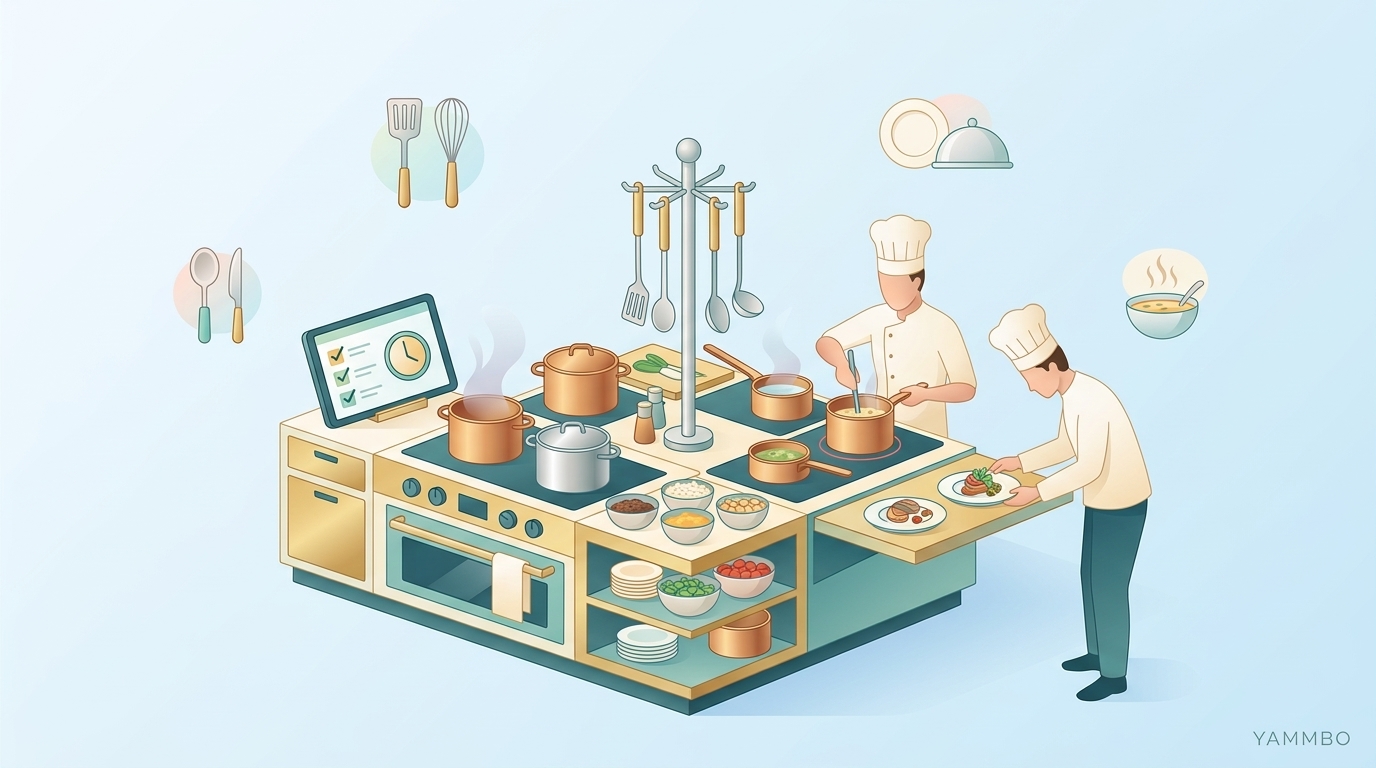
Restaurants captivate us with their aromas, vibrant ambiance, and the promise of a delicious meal. From a diner’s perspective, the process seems straightforward: order, wait a bit, enjoy. Yet, behind every perfectly plated dish and seamless service lies an intricate web of operations, a hidden maze of tasks, decisions, and dependencies that few outsiders ever truly grasp. The apparent simplicity is, in fact, one of the quiet triumphs of a well-oiled establishment.
For those on the inside, however, the reality is vastly different. Food service is arguably one of the most demanding operational environments in any industry. It’s a high-stakes balancing act involving volatile ingredients, precise timeframes, coordinated human effort, strict regulations, and constant customer interaction—all happening simultaneously, under immense pressure, and with minimal room for error. This complexity doesn’t announce itself; it accumulates subtly, often catching operators off guard when minor issues rapidly escalate into major disruptions. Achieving operational simplicity isn’t a luxury; it’s a fundamental necessity that must be meticulously constructed.
The Illusion of Simplicity: What Customers Don’t See
From the moment a customer steps through your doors or places an online order, their experience is designed to be effortless. They see the finished product: a perfectly cooked steak, a beautifully crafted cocktail, a neatly packaged takeout meal. They don’t witness the frantic dance in the kitchen, the precise timing of ingredient prep, the careful management of inventory, or the synchronized efforts of a diverse team. This invisibility is intentional; it’s the hallmark of a successful operation that has mastered its internal workings.
However, this outward appearance of ease can be deceptive. It often leads new operators, or even seasoned ones, to underestimate the sheer volume of moving parts that contribute to that smooth customer journey. Believing that an operation will feel as simple on the inside as it appears from the outside is a common pitfall. The truth is, every successful restaurant is a testament to overcoming profound operational challenges, often daily. Understanding these underlying complexities is the first step toward building a truly resilient and profitable food business.
Timing is Everything: The Relentless Clock of Food Service
In the world of food service, time is not just a factor; it’s a critical dimension that dictates nearly every action. Preparation windows are finite, often measured in minutes or even seconds for peak efficiency. Cooking sequences demand precise timing, where a delay in one station can throw off an entire line. Delivery schedules are commitments to customers that, if missed, can lead to dissatisfaction and lost business.
A single delay, whether it’s a late ingredient delivery, a malfunctioning piece of equipment, or an unexpected staff shortage, can ripple through the entire operation. This propagation of delays can turn a minor hiccup into a full-blown crisis. Experienced operators understand that timing is a system of intricate interdependencies. They strategically build buffer time into their processes, recognizing that in a dynamic food environment, something almost always goes awry. The crucial question isn’t whether disruptions will occur, but whether the system possesses enough built-in resilience to absorb them without compromising output or quality.
Orchestrating Chaos: The Art of Restaurant Coordination
Imagine a symphony where every musician, instrument, and note must align perfectly for a harmonious performance. A restaurant operates on a similar principle, but with far more variables. It demands the simultaneous alignment of multiple independent systems: the flow of fresh ingredients, the availability and skill of staff, the readiness of equipment, the precise execution of production sequences, the correct packaging, and the punctual delivery or table service.
When every element is perfectly synchronized, coordination appears effortless. Orders flow smoothly from the front of house to the kitchen, dishes are prepared and served promptly, and customers leave satisfied. However, the moment even one element falls out of alignment—a forgotten order, a miscommunication between servers and cooks, an unexpected rush, or a sudden shortage of a key ingredient—the entire operation must compensate in real-time. This real-time adjustment happens under the same relentless time pressure and the same unwavering quality standards. The true demanding nature of coordination reveals itself precisely when things go wrong, highlighting the critical need for robust systems that facilitate seamless communication and workflow management.
The Perishable Problem: Managing What Doesn’t Wait
What truly sets food operations apart from many other industries is the inherent perishability of its core inventory. Unlike durable goods, food does not wait. It does not hold its value indefinitely. It expires. This ticking clock creates immense pressure on virtually every operational decision, from initial purchasing and strategic production planning to meticulous inventory management, efficient delivery scheduling, and responsible waste management.
Operators face a continuous, high-stakes tension between having too much inventory and having too little. Overstocking leads to spoilage and financial loss, while understocking results in missed sales opportunities and dissatisfied customers. This delicate balance must be managed in real-time, often with imperfect information about fluctuating daily demand. Effective management of perishables requires not just careful planning, but also agile systems that provide accurate, up-to-the-minute data on stock levels, consumption rates, and demand forecasts. Without such tools, the “perishable problem” can quickly erode profit margins and operational efficiency.
Scaling Challenges: When Volume Multiplies Complexity
A system that functions flawlessly at low volume does not automatically translate to success when production volume increases. The complexity in food service operations does not scale linearly; it compounds exponentially. As the number of customers, orders, or dishes prepared grows, every dimension of complexity intensifies. Timing windows tighten, coordination becomes exponentially more demanding, and the margin for error shrinks dramatically.
Small inefficiencies that were negligible during slower periods can become catastrophic at high volume. A minor deviation in a prep step, repeated across hundreds of batches, can result in significant quality inconsistencies by the end of the day. A small pattern of waste, left unaddressed for a week, can translate into a measurable and damaging impact on profit margins by the end of the month. Maintaining an unwavering attention to detail is paramount to prevent these small inefficiencies from snowballing into larger, more detrimental outcomes. Scaling successfully requires not just more resources, but smarter systems that can handle increased throughput without sacrificing precision or quality.
Turning Complexity into Control with Yammbo POS
Understanding these hidden complexities is the first step, but the real challenge lies in mastering them. This is where modern operational tools become indispensable. Imagine a system that not only helps you track every ingredient from delivery to plate, but also streamlines your order flow, optimizes staff scheduling, and provides real-time insights into your sales and waste patterns.
Yammbo POS is designed precisely for this purpose. It transforms the intricate dance of restaurant operations into a manageable, transparent process. By integrating critical functions like order management, inventory control, table management, and detailed reporting, Yammbo POS empowers restaurateurs to move beyond reactive problem-solving. It provides the data and tools needed to proactively address timing challenges, enhance coordination, minimize perishable waste, and scale operations confidently. With Yammbo POS, you gain the clarity and control necessary to build resilience, boost efficiency, and ensure that the seamless experience your customers enjoy is a reflection of a truly optimized operation.
In a fast-paced industry where every second and every ingredient counts, operational simplicity isn’t a happy accident—it’s the result of deliberate design and the right technological partnership. By embracing solutions like Yammbo POS, you can navigate the hidden complexities of your restaurant, turning potential challenges into opportunities for growth and sustained success. Discover how Yammbo POS can streamline your restaurant’s operations and empower your team to deliver exceptional experiences, every single day, by visiting Yammbo POS.